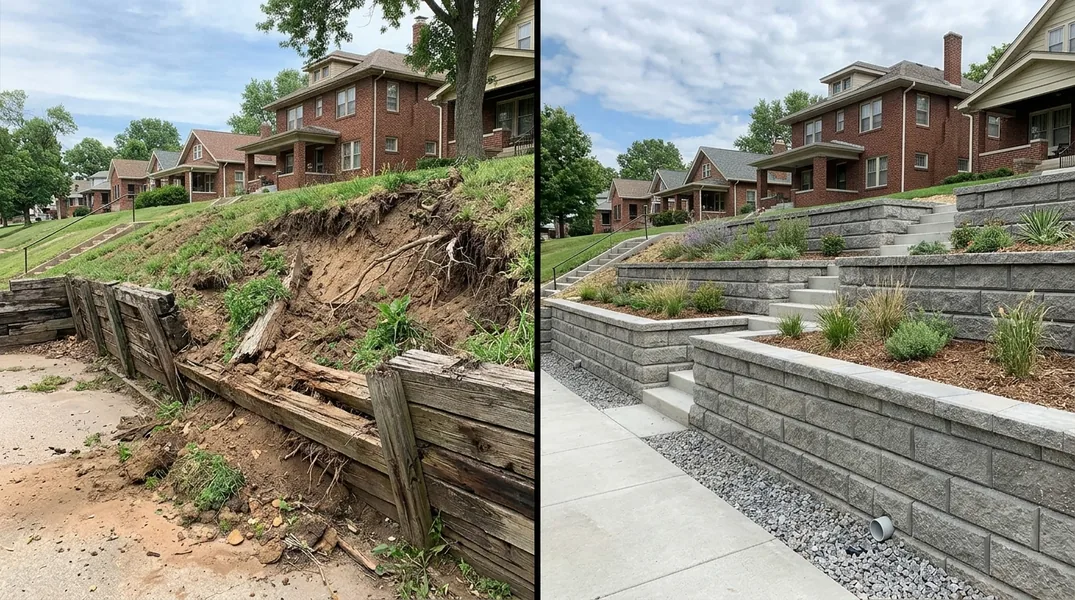
Why Omaha's Spring Thaw Is Tough on Retaining Walls
Spring in Omaha brings a familiar rhythm: snow melts, the ground softens, and water starts moving through the soil. That water has to go somewhere. When it gets trapped behind a retaining wall, it becomes one of the most destructive forces a homeowner can face. The freeze thaw cycle is the engine behind the problem. During winter, moisture in the soil freezes and expands. As temperatures climb in March and April, that ice turns back into liquid water, often all at once. The soil behind your wall can become saturated faster than it can drain, and the pressure builds directly against the back of the wall.
This is why retaining wall drainage is not a minor detail. It is the difference between a wall that stands for decades and one that leans, cracks, or fails within a few seasons. Many homeowners in neighborhoods like Papillion and La Vista discover the issue only after they see soil washing out or blocks shifting. By then, the damage has often been developing quietly for years. Understanding what happens underground during the thaw is the first step toward protecting your investment.
Hydrostatic Pressure: The Silent Force Behind Wall Failure
Hydrostatic pressure retaining wall problems are the most common cause of structural failure we see. The concept is simple: water weighs about 62 pounds per cubic foot. When saturated soil cannot drain, that water fills the voids between soil particles and pushes outward in every direction. Behind a retaining wall, that outward push has nowhere to go but against the wall itself. A wall designed to hold back dry soil may face double or triple the load when the soil is saturated. That extra load is hydrostatic pressure, and it does not announce itself. There is no warning light, no alarm. The wall simply starts to bulge, tilt, or crack.
Clay soils common in the Omaha area make this worse because they drain slowly. Water can sit behind a wall for days or weeks after a heavy spring rain, keeping pressure elevated. Over time, the wall's footing may shift, the drainage gravel may clog with fines, and the weep holes may stop working. Once hydrostatic pressure exceeds what the wall was built to handle, failure becomes a matter of when, not if. This is why any honest conversation about Retaining Wall Repair starts with water management, not just patching cracks.
How a Retaining Wall French Drain Protects Your Wall
A retaining wall french drain is the most reliable defense against hydrostatic pressure. The system typically includes a perforated pipe at the base of the wall, surrounded by washed gravel and wrapped in filter fabric to keep soil out. As groundwater collects behind the wall, it flows into the gravel, enters the pipe, and is carried away from the wall to a safe discharge point. When designed and installed correctly, a french drain keeps the soil behind the wall from ever becoming saturated enough to threaten the structure. It is a simple concept executed with careful grading and materials.
The details matter more than most homeowners realize. The pipe must slope correctly, the gravel must be clean and properly sized, and the filter fabric must be placed to prevent clogging. A drain that is installed without these details can fail within a few years, leaving you with the same hydrostatic pressure problem you started with. If your wall was built without drainage or the existing system has clogged, a professional assessment is worth the call. You can reach Omaha Retaining Wall at (402) 281-9526 to discuss whether your wall needs a drainage retrofit or a larger repair.
Warning Signs of Drainage Failure to Watch For This Spring
As the thaw progresses, take a walk around your property and look closely at any retaining wall. Bulging or leaning is the most obvious sign that water pressure is building. Cracks that run horizontally or stair step through block joints are another red flag. You may also notice soil washing out from behind the wall, water pooling at the base, or weep holes that are stained or clogged. In some cases, the ground behind the wall sinks slightly as soil migrates into a failed drain. Any of these signs means the wall is telling you something, and it is better to listen early.
Homeowners in Ralston and across the metro often mistake small cracks for cosmetic issues. In reality, a crack in a retaining wall is rarely just cosmetic. It is a pathway for water, and water is what caused the crack in the first place. If you see movement or drainage problems, a professional inspection can determine whether the wall needs a targeted repair or full Retaining Wall Replacement. Catching the issue in spring, before summer storms add more water, usually saves money and reduces the risk of a sudden collapse.
Retaining Wall Installation Near Me: Getting Drainage Right From Day One
The best time to solve a drainage problem is before the wall is built. Proper Retaining Wall Installation includes a drainage plan from the start: graded backfill, clean gravel, filter fabric, a perforated drain pipe, and a clear discharge path. It also means choosing materials suited to the site. Concrete Retaining Walls can be an excellent choice for durability, but even the strongest wall will fail if water is allowed to build up behind it. The wall and the drainage system have to be designed as one unit.
If you are planning a new wall or worried about an existing one, it helps to work with a local contractor who understands how Omaha's soils and freeze thaw cycles affect retaining structures. A proper site assessment will look at slope, soil type, and where water goes during a heavy rain. That is the kind of detail that separates a wall that lasts from one that becomes a repair project. You can request a free estimate to get a clear picture of what your property needs and what it will take to protect it.
Retaining Wall Drainage Cost in Omaha: What to Budget
Homeowners often ask what drainage work adds to a project. The honest answer is that it depends on the wall's height, length, soil conditions, and whether the drain can discharge by gravity or needs a sump and pump. A drainage system included in a new wall build is typically a modest portion of the overall project, while retrofitting drainage to an existing wall can vary more widely depending on access and the condition of the wall. Repairing a wall that has already failed is almost always more expensive than building drainage correctly the first time.
Rather than guessing, ask for a written scope that separates the wall structure from the drainage components. That makes it easier to compare bids and confirm that drainage is not being skipped to lower the number. For a clearer sense of what local projects typically run, review the company's pricing page or call (402) 281-9526 to talk through your situation. A short conversation about your wall's age, height, and visible symptoms can help you decide whether you need maintenance, repair, or a full replacement before the next round of spring rain arrives.
Looking for a professional retaining wall contractor in Omaha? Omaha Retaining Wall responds fast for all your retaining wall needs.
Get a Free QuoteOur services: Retaining Wall Installation · Retaining Wall Repair · Retaining Wall Replacement